
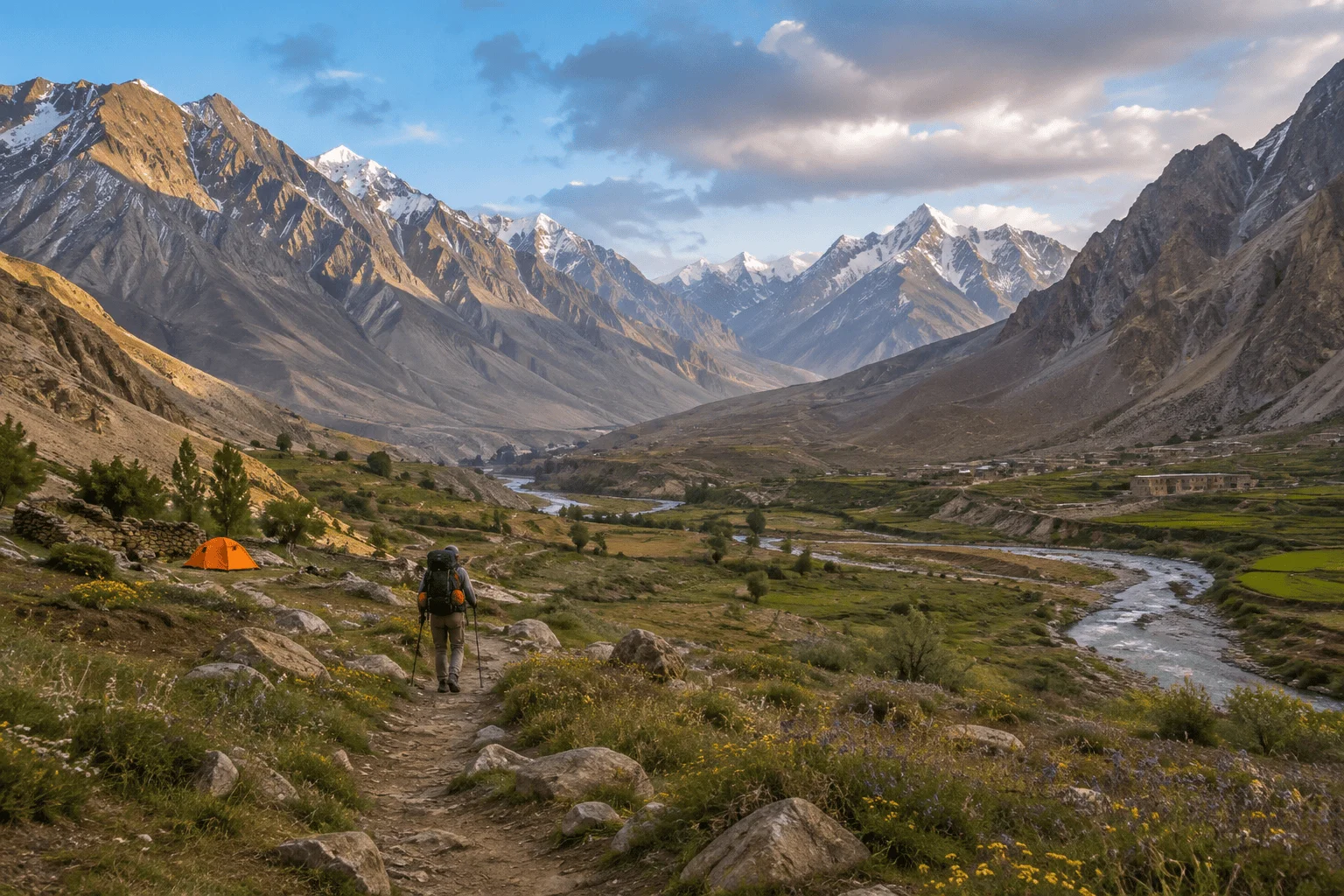
The Expedition Planning Journey
Expedition success depends on a structured planning framework. While each mountain presents unique challenges, the logistical foundation remains the same.
Start with the Mountain and the Team
Early planning should focus on aligning the expedition objective with the team's capabilities and goals.
- Objective: Altitude, technical requirements, and route history.
- Team: Size, previous high-altitude experience, and expedition style.
- Timeframe: Total duration including approach, acclimatization, and return.
- Support: Desired level of ground and high-altitude support.
Confirm Requirements Early
Expedition documentation is complex and varies based on the specific peak, team nationality, and current government regulations.
- Permit Support: Coordination of peak permits and environmental bonds.
- Liaison Officer (LO): Designated government coordination where required.
- Timeframes: Start the documentation process well in advance to ensure compliance.
Note: We provide permit and documentation support, but individual requirements are subject to government approval. More on Permits →
Build the Ground Operation
We coordinate the logistical framework required to get your team to the base of the mountain. Services are tailored to the confirmed expedition program.
- Transfers: Road coordination and specialized 4x4 transfers.
- Accommodation: Chitral-based preparation and valley stays.
- Approach: Porter and pack-animal logistics for remote valley travel.
- Base Camp: Infrastructure, kitchen support, and food logistics.
- Communication: Coordination of essential mountain communication equipment.
Build Time for the Mountain
Acclimatization is a biological process that cannot be rushed. A successful expedition itinerary must prioritize gradual progression and rest.
- Acclimatization Cycles: Time built into the program for adjusting to altitude.
- Climbing Window: Sufficient days to wait for appropriate weather and route conditions.
- Summit Success: Note that summit success can never be guaranteed; the mountain and conditions dictate the final outcome.
Build Flexibility Into the Expedition
Contingency time is an essential component of expedition planning. Delays due to weather, road conditions, approach challenges, or team health are common in the Hindu Kush.
We do not guarantee summit windows, road openings, or the immediate availability of helicopter evacuation, which is subject to weather and regional operational clearance.
Case Study: Planning for Tirich Mir
As the highest peak in the Hindu Kush, Tirich Mir (7,708m) demonstrates the scale of expedition planning required. A typical journey involves Chitral-based coordination, Terich Valley access, a multi-day approach trek, and a significant window for high-altitude climbing and acclimatization.
Preparation Does Not Remove All Risk
Technical mountaineering involves inherent risks. While preparation and logistical support provide a foundation, teams must make decisions appropriate to their experience and current mountain circumstances.
Frequently Asked Questions
How far in advance should I plan a Hindu Kush expedition?
Can HindukushTours.com support expedition permits?
What ground logistics can be arranged?
Can you provide porter and base-camp support?
How much contingency time should an expedition include?
Is summit success guaranteed?
Can evacuation always be guaranteed?
Key Planning Considerations
- Peak permit & documentation support
- Complex approach & base camp logistics
- Team experience & objective matching
- Acclimatization & contingency planning
- Remote communications systems